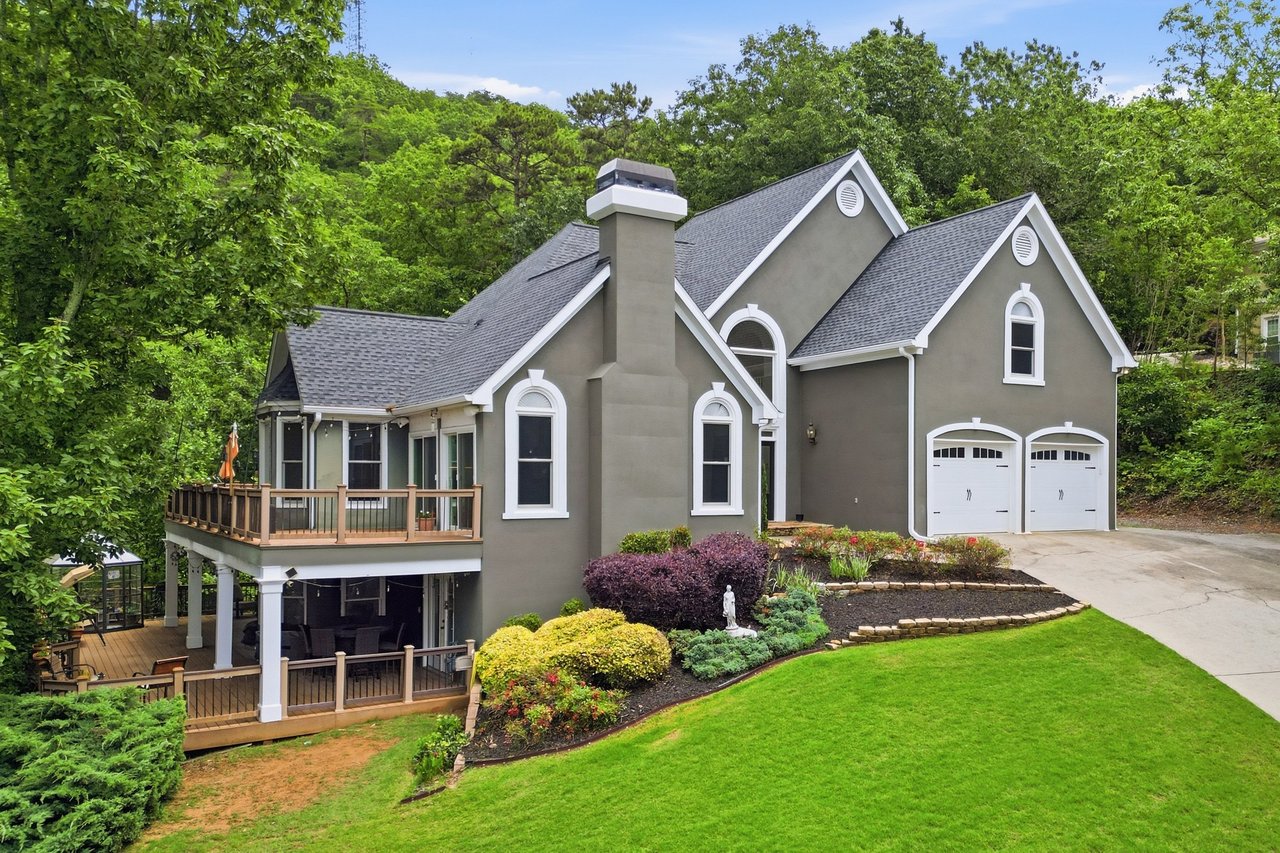
Renovating in a Marietta Historic District: The COA Process
Home Selling Tips

Home Selling Tips
A Certificate of Appropriateness is the step that surprises Marietta homeowners most often, usually about three weeks before they wanted to start work. If your property sits inside a locally designated historic district, exterior changes generally require review and approval before the first contractor shows up. Getting that sequence right protects a renovation budget and a listing timeline. Getting it wrong can stop a project that was already scheduled.
This is a process guide to how historic review works in Marietta and under Georgia law. It is not legal advice, and the specifics for your address should be confirmed with the City of Marietta Planning and Zoning department.
This is where most confusion starts, because Marietta has two different kinds of historic designation and only one of them creates a review requirement.
The City of Marietta's only locally designated residential historic district is the Kennesaw Avenue Historic District, established August 14, 2013. Marietta also has four local landmarks: Brumby Hall at 472 Powder Springs Street, the Clarke Library at 156 Church Street, the Marietta Waterworks at 426 Sessions Street, and the Smith-Manning House at 360 Manning Road.
Separately, several Marietta neighborhoods are listed on the National Register of Historic Places. National Register listing is a federal honorific and a recognition of significance. Local designation is the mechanism that actually requires a Certificate of Appropriateness before exterior work. Owners frequently assume the two are the same thing. They are not, and the distinction determines what you have to file.
The city maintains a page listing its historic districts and local landmarks, which states plainly that properties within the district must first obtain a Certificate of Appropriateness prior to the commencement of any projects listed under the relevant article of the code. If you are not certain which category your property falls into, call Planning and Zoning before you design anything. A five minute call is cheaper than a redesign.
Local historic ordinances in Georgia are written under the Georgia Historic Preservation Act, which sets the statewide floor. Under the Act, a Certificate of Appropriateness is required for a material change in appearance, which includes reconstruction or alteration of the size, shape, or facade of a historic property, demolition of a historic property, commencement of excavation, changes to advertising visible from public rights of way, and the erection, alteration, or removal of buildings and structures within a district.
Three exclusions matter to most homeowners. Exterior paint is expressly excluded from the definition of a material change. Ordinary maintenance or repair that does not involve a material change in design is exempt. Interior arrangements with no exterior effect are not reviewable at all. That means a kitchen gut renovation that changes nothing visible from outside sits in a very different position than a window replacement or an addition.
The Georgia Historic Preservation Act is published by the Georgia Department of Natural Resources Historic Preservation Division and is the document to read if you want the statutory language for yourself. Marietta's own ordinance article contains the local list of triggering activities, and that list is what governs your specific project, so confirm it with the city rather than relying on the state floor alone.
Georgia law puts a hard outer bound on it. The commission must approve or reject an application within 45 business days after filing. If the commission fails to act within 45 business days, the application is deemed approved and no further documentation is required. That is a meaningful protection, but 45 business days is roughly nine calendar weeks, so it is not a fast track.
Marietta's Historic Preservation Commission meets two Mondays prior to regularly scheduled City Council meetings, following the Historic Board of Review meeting, no earlier than 5:45 p.m., typically in the Council Chamber. The commission has seven members, one per ward, who must live within the city limits and have expertise in history, architecture, or preservation. The Kennesaw Avenue district also seats two ex officio voting members who are district residents.
Because review runs on a meeting calendar rather than a rolling basis, the filing deadline for a given meeting is the date that actually controls your schedule. The Historic Preservation Commission page references a meeting and deadline calendar. Pull it before you commit to a contractor start date.
A denial can be appealed to the local governing body, which may approve, modify and approve, or reject the commission's determination. Further appeal goes to superior court. Most homeowners never reach this stage, because most denials are resolved by revising the application rather than by litigating it.
Marietta's Historic Board of Review handles design review for the downtown and commercial context, which is a different body from the Historic Preservation Commission. Its application categories are signs or painting, storefront repair, alteration, renovation, and miscellaneous work, and new construction. Applications and scheduling run through 770-794-5669. The Downtown Marietta Development Authority separately offers a 50/50 matching grant of up to $2,000 for signage and awning improvements, which is worth knowing if you own commercial frontage on or near the Square.
Two ways, and both are manageable with lead time.
If your pre-listing plan includes windows, siding, roofing profile changes, porch work, fencing, or an addition, the review calendar has to sit at the front of the schedule rather than the back. Build backward from your target listing date: filing deadline, commission meeting, decision, permit, contractor, then photography. Sellers thinking through what to do before listing should read this alongside our guide on renovating before selling a Marietta home.
A buyer purchasing in a locally designated district is buying the review requirement along with the house. That is not a negative, and for many buyers the design controls are part of the appeal, but it should be disclosed clearly and early rather than discovered during due diligence. Sellers should also be prepared to answer what past work was reviewed and approved. Owners drawn to older housing stock generally will find context in our overview of old historic homes in metro Atlanta and in our lifestyle look at the historic Marietta Square.
Under the Georgia Historic Preservation Act, violations are punished in the same manner as other municipal or county ordinance violations. The practical exposure for a seller is not just a citation. It is an open compliance question surfacing during a buyer's due diligence with no clear resolution date, which is exactly the kind of item that reopens price. If prior work is undocumented, sort it out before the listing goes live rather than after.
Applications are judged on documentation as much as on design. Expect to provide a site plan or plat showing the work location, elevations or drawings of the proposed change, photographs of the existing conditions from several angles, and product specifications for anything visible from the street, such as window profiles, siding material, roofing, or railing details. Vague applications get continued to the next meeting, which is how a nine week outer bound quietly becomes four months.
The recurring subjects in residential historic review are windows, siding, additions, and demolition. Window replacement draws scrutiny because sash profile, muntin pattern, and material change the reading of a facade. Additions are usually evaluated on placement, scale, and how clearly the new work reads as new rather than as original fabric. Demolition, even partial, is the highest bar. Owners who bring these questions to the city early, in concept form, tend to get through review with fewer revisions than owners who arrive with finished construction documents.
Which Marietta district requires a Certificate of Appropriateness? Kennesaw Avenue is the city's locally designated residential historic district, established August 14, 2013, plus four designated local landmarks. National Register listing alone does not trigger local review.
Do I need approval to repaint my house? Under the Georgia Historic Preservation Act, exterior paint is expressly excluded from the definition of a material change in appearance, and ordinary maintenance that does not change design is exempt. Confirm Marietta's local list with Planning and Zoning.
How long does review take? Georgia law requires the commission to approve or reject within 45 business days of filing. Failure to act within that window means the application is deemed approved.
Does interior work need a Certificate of Appropriateness? Interior arrangements with no exterior effect are not reviewable under the Act. Building permits may still be required separately.
Historic review in Marietta is a calendar problem more than a difficulty problem. Confirm which designation applies to your address, read the local list of triggering activities, file against the published meeting deadline, and build the 45 business day outer bound into your plan. Owners who do that get their projects approved. Owners who improvise get delayed.
Clareo Group, powered by The Agency Atlanta, sits a few minutes from the Marietta Square and builds historic review into the pre-listing calendar so a renovation and a listing date do not collide. Reach out before you schedule a contractor and we will map the sequence for your property.
Start Your New Home Search Now!
Stay up to date on the latest real estate trends.
You’ve got questions, and we can’t wait to answer them.