Alpharetta vs. Milton
Milton
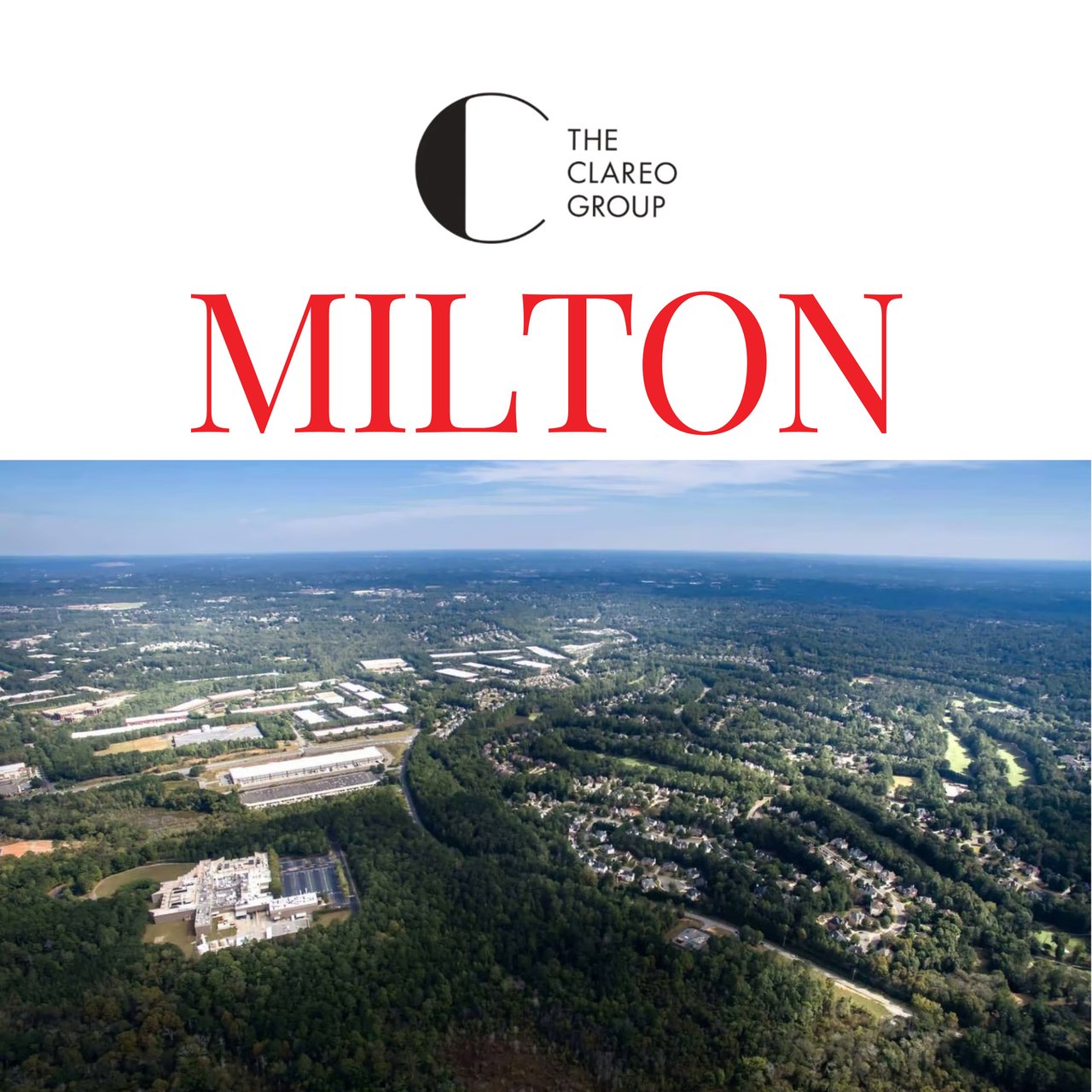
Milton
Alpharetta and Milton share a border, a school district, and a reputation as two of the most desirable addresses north of the city. From there, the similarities mostly end. Alpharetta has built itself into a genuine live-work-play destination, with a downtown, a tech corridor, and mixed-use development that draws people from across the region. Milton has done almost the opposite, deliberately protecting its rural, equestrian character since incorporating in 2006 and resisting the kind of commercial growth that has reshaped so much of North Fulton. Both are excellent addresses. They are just built for different versions of a good life.
Alpharetta has earned its nickname as the Technology City of the South, home to a dense concentration of corporate offices and tech employers that has reshaped the local economy over the past two decades. That growth shows up most visibly at Avalon, the mixed-use development that combines upscale retail, dining, office space, and residences into a genuine downtown-style destination, and at Halcyon, a newer development following a similar formula further north along GA 400.
Historic downtown Alpharetta still holds its own alongside the newer development, with a walkable core along Milton Avenue and Main Street that has kept much of its small-town character even as the city around it has grown. Wills Park anchors the community's recreational life with an equestrian center, an aquatic facility, and sports fields, giving Alpharetta a genuine mix of urban energy and family-oriented amenities within the same city limits.
The city's housing stock reflects that same range, from established neighborhoods with mature landscaping near the historic downtown to newer construction and townhomes closer to Avalon and Halcyon. That variety means Alpharetta can suit a young professional wanting proximity to nightlife just as easily as a family wanting a quieter cul-de-sac a few minutes further out, all under the same highly regarded school system.
Milton exists largely because a group of residents wanted to make sure North Fulton's rural character did not disappear entirely into subdivisions and shopping centers. Since incorporating, the city has held firm on preserving large-lot zoning, horse farms, and green space, particularly in the area still referred to as Rural Milton. The result is a community where multi-acre properties, equestrian facilities, and genuine pastureland exist within a short drive of some of the busiest commercial corridors in the state.
Crabapple, Milton's walkable village district, offers a smaller-scale alternative to Alpharetta's larger developments, with a growing collection of restaurants, boutiques, and community events built around a historic crossroads rather than a master-planned commercial center. For buyers who want space, privacy, and a genuinely rural feel without leaving the North Fulton school district or giving up a reasonable commute, Milton has become the answer.
The city's housing stock is defined by scale as much as style, with multi-acre estate lots, working horse farms, and custom-built homes that would be difficult to find inside almost any other close-in metro Atlanta community. Smaller lots do exist, particularly nearer Crabapple, but Milton's identity is built around the properties that offer genuine room to spread out.
Lifestyle, Not Just Location
If you want walkable retail, dining, and a built-in social scene. Alpharetta's Avalon and Halcyon developments deliver an energy and convenience that Milton does not attempt to replicate.
If you want acreage, privacy, and a working relationship with the land. Milton's large-lot zoning and equestrian culture offer a genuinely rural lifestyle inside the metro Atlanta school and commute radius.
If you want a smaller, historic village feel over a large development. Crabapple's scale is a deliberate contrast to Avalon's, and the right choice depends on which kind of gathering place actually suits you.
This comparison has genuine substance for buyers whose daily routine includes running, cycling, riding, or simply spending real time outdoors.
Alpharetta's outdoor identity centers on the Big Creek Greenway, a paved multi-use trail that winds for miles through the city, connecting neighborhoods, parks, and commercial areas in a way that has made it one of the most heavily used trail systems in North Fulton. Wills Park adds an equestrian center, walking trails, and athletic fields to the mix, giving Alpharetta residents a strong combination of paved trail access and organized recreation.
Milton's outdoor life runs in a different direction entirely. Equestrian trails wind through much of Rural Milton, supporting a genuine horse culture that includes boarding facilities, riding clubs, and rural roads well suited to road cycling. Birmingham Park serves as a central hub for that equestrian community, while the city's broader commitment to preserving open land means Milton residents are more likely to spend outdoor time on their own property, or a neighbor's pasture, than on a paved public trail. For buyers whose idea of staying active includes horses, land, or genuine quiet, Milton offers something Alpharetta's denser development cannot. Both cities also sit within reasonable driving distance of the North Georgia mountains, giving residents of either community quick access to hiking and lake recreation on weekends without depending on it as part of daily life.
Avalon and Halcyon give Alpharetta a retail and dining scene that rivals much larger cities, with national retailers, a wide range of restaurants, and regular public programming that draws visitors from across the region, not just residents. That scale is a genuine amenity, though it also means Alpharetta's core commercial areas can feel busy and visitor-heavy, particularly on weekends.
Milton's Crabapple district takes the opposite approach, favoring a smaller collection of independent restaurants and shops built around a historic crossroads rather than a master-planned center. It is a quieter, more residential experience, and for many Milton buyers, that is precisely the point. Anyone wanting Avalon-level retail and dining still has it close by, just outside city limits, without needing it built into their own neighborhood.
Alpharetta's civic life is shaped heavily by its corporate presence, with a business community that plays an active role in the city's philanthropic and civic organizations, alongside a growing arts scene supported by the Alpharetta Arts Center and a robust calendar of city-sponsored events.
Milton's civic identity is younger and more singularly focused, built around the ongoing effort to preserve the city's rural character through zoning, land conservation, and an active equestrian community. Civic involvement here often centers on those preservation efforts, along with a growing number of churches and community organizations that have developed alongside the city's population since its 2006 incorporation. For residents with a philanthropic streak, Milton's smaller, tightly connected community can make it easier to see the direct impact of local involvement than a larger, more corporate civic landscape typically allows.
Alpharetta and Milton are both independently incorporated cities within Fulton County, and like any two separate municipalities, they set their own city millage rates on top of the shared Fulton County tax. Those rates are not identical, and because both cities adjust their budgets independently each year, the gap between them can shift over time.
Milton's large-lot properties add another layer worth understanding, since acreage, agricultural exemptions in some cases, and rural zoning can all affect how a specific property is assessed. Rather than assume a similar home in either city will carry a similar tax bill, we recommend confirming current millage rates and any applicable exemptions directly with the Fulton County Tax Assessor's Office, or through your closing attorney, before comparing the two too closely on paper.
For buyers weighing a large equestrian property specifically, it is also worth asking early whether any portion of the land qualifies for a conservation or agricultural assessment, since that can meaningfully change the annual carrying cost of a property with real acreage attached to it.
Both cities sit along the GA 400 corridor, which keeps commute times into Sandy Springs, Buckhead, and Downtown Atlanta reasonable for a North Fulton address, though Alpharetta's position closer to the highway and its own dense employment base means many residents barely commute at all. With so many corporate offices located directly in Alpharetta, a significant share of residents work within a few minutes of home.
Milton sits further from GA 400 in its western and northern reaches, particularly in Rural Milton, which means longer drive times for residents who commute into Alpharetta, Sandy Springs, or beyond. For buyers who work from home, run their own business, or have largely retired from a daily commute, that tradeoff often matters far less than the acreage and privacy gained in return. For those still commuting five days a week, it is worth timing the actual drive from a specific property before assuming the map distance tells the full story.
Both cities have seen strong, sustained demand, supported by highly regarded schools, proximity to major employment centers, and a limited supply of the kind of large-lot or amenity-rich inventory each offers. Rather than compare specific price points here, which vary considerably by lot size and location within each city, the more useful conversation is a direct one about current inventory and recent closed sales in the specific area you are considering.
Alpharetta suits buyers who want walkable retail, a built-in social scene, and the convenience of a genuine downtown, all within a highly regarded school district. Milton suits buyers who want acreage, privacy, and a rural lifestyle, often centered on horses or simply open land, without sacrificing proximity to the same schools and commute corridors.
It is also worth considering how each city is likely to change, or not change, over time. Alpharetta has embraced growth as its identity, and Avalon and Halcyon suggest more development is likely to follow in a similar vein. Milton has built its entire civic identity around resisting that same kind of growth, and its zoning and land-use policies have consistently reinforced that direction since incorporation. Buyers drawn to Milton specifically for its rural character can reasonably expect that character to hold, which is precisely the point for many of the families and equestrian buyers who choose it.
The two cities were built with almost opposite intentions, one to grow into a destination, the other to resist becoming one, and the right choice usually comes down to which of those two instincts matches your own.
By The Agency Atlanta
The Agency Atlanta is a concierge-style, full-service residential brokerage serving Metro Atlanta, with offices in Midtown Atlanta and Marietta. Creating a clear path to success.
Start Your New Home Search Now!
Stay up to date on the latest real estate trends.
You’ve got questions, and we can’t wait to answer them.