What Is It Really Like to Live Near Truist Park?
Cobb County
Cobb County
Deborah Morton, Managing Partner, The Agency Atlanta. RealTrends Top 1.5%.
Living near Truist Park is mostly a quiet, ordinary suburban experience, punctuated by busy evenings. On most days the area works like any other part of Cobb County, with highway access, shopping and restaurants close by, and on game nights and event nights traffic builds and the streets around The Battery fill with visitors.
The Battery's own events calendar shows the pattern. One evening it lists a free yoga class on the Plaza Green; a few nights later it lists a concert at the Coca-Cola Roxy, with a note that road closures go into effect before large events.
That pairing is the whole story in miniature. Whether it sounds like a perk or a pain says a lot about whether this is the right place for you. This guide covers the practical questions first, then the lifestyle around them.
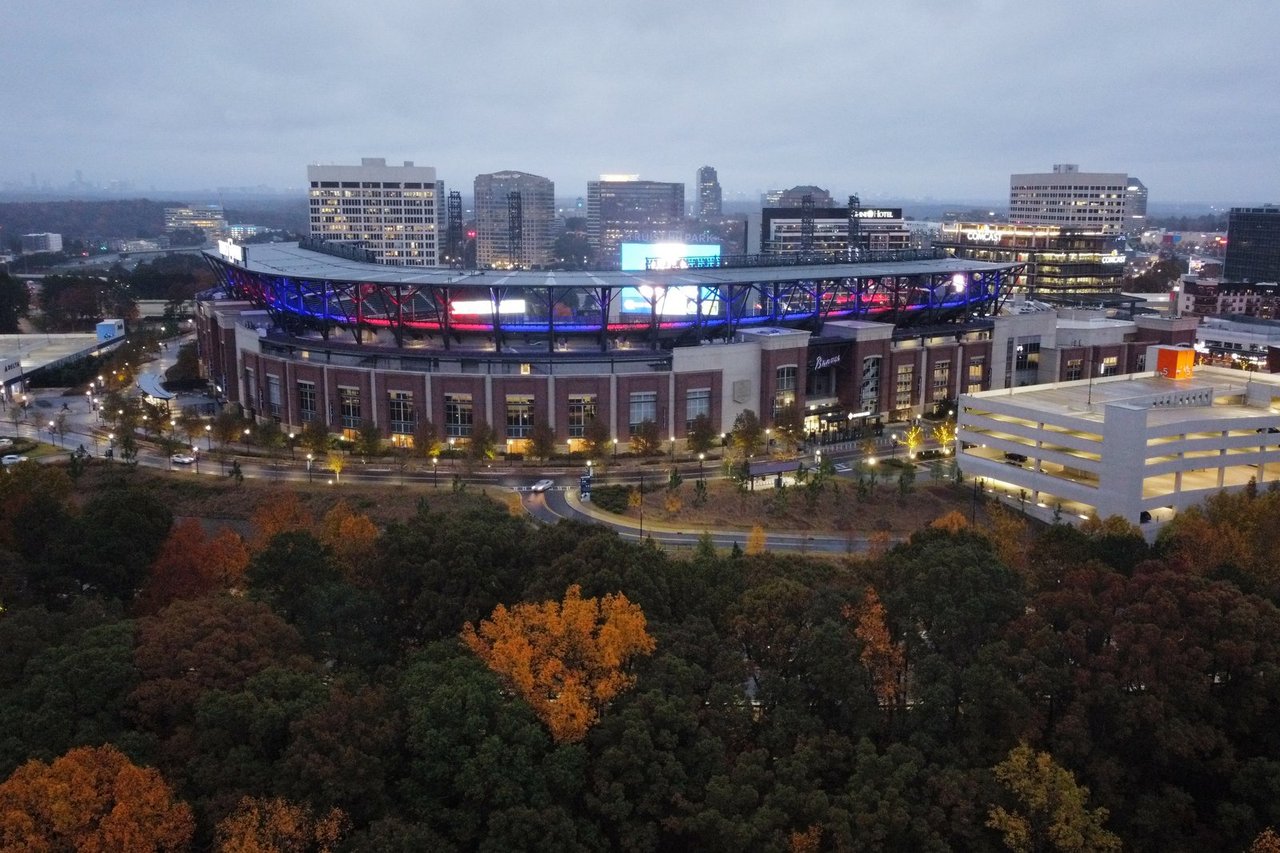
Truist Park is in the Cumberland area of unincorporated Cobb County, about 10 miles northwest of downtown Atlanta. Its address is 755 Battery Avenue SE, Atlanta, GA 30339, but that "Atlanta" is a mailing city, not a city limit.
Cobb County's own city-boundary map shows the ballpark outside every city, and the same is true of nearby Vinings. A U.S. Census Bureau geocoder check of the ballpark's address returns Cobb County and the Cobb County School District, with no incorporated city. Vinings shows up there as a census-designated place, which is a statistical label, not a city government.
The county's addressing office explains the difference plainly. The mailing city is tied to the post office that delivers the mail and to the ZIP code, while the jurisdiction is "the real address for all government purposes," from taxes and building permits to police, water and trash service.
Practically, that means Cobb County government, Cobb County property taxes and the Cobb County School District. If you are comparing homes, confirm the jurisdiction of each specific address rather than assuming it from the mailing city. For a broader explainer, see our guide to moving to Atlanta when you don't know the map.
It is real, and it is predictable. The Braves play 81 regular-season home games, and concerts at the Coca-Cola Roxy and other events at The Battery add more evenings to the calendar.
Traffic tends to concentrate around the interstate interchanges and the roads that feed the ballpark, in the hours before first pitch and after the final out. The Battery's event listings also warn that road closures go into effect before large events, so a short drive can take a different route on those nights.
One sensible way to adapt is to learn the back routes, run errands before the pregame rush, and plan around the schedule the way you would plan around school pickup. The schedule is public, so surprises are rare. If you do not like planning around it, a home a few miles outside the immediate district gives you the benefits of the area with less of the congestion.
A practical tip for anyone shopping: visit the address at a time that would be difficult. Try a weeknight game, then try a Saturday afternoon. Ten minutes of watching the traffic tells you more than a map, and our pros and cons of living in Cobb County covers the wider commuting picture.
The two main sources are crowds and amplified music. Concerts at the Coca-Cola Roxy, nightlife at Live! at the Battery and special events produce noise that varies with distance, building materials, wind and which direction your windows face.
A unit directly overlooking the entertainment district will hear more than a townhome tucked a few streets away. We cannot give you a fair number of decibels, and we would be suspicious of anyone who does.
What works is experience. Stand outside the address during an event, and ask a neighbor. Ask the association or the leasing office about their quiet-hour rules and how event noise complaints are handled.
Inside The Battery itself, much of the district is walkable, which is a large part of its appeal. For longer trips, the area is built around its roads, with direct access to the interstates, and most daily trips depend on a car.
Public transit exists, with limits. CobbLinc's fare-free Circulator Blue runs a continuous loop between the Cumberland Transfer Center, Cumberland Mall, Akers Mill Square, Cobb Galleria and Truist Park.
From the Marietta Transfer Center, CobbLinc's Route 15 stops on Circle 75 Parkway, directly across from the stadium. Route 10 and Rapid 10 stop at Cobb Parkway and Cumberland Boulevard, about a 0.4-mile walk away.
The Cumberland Transfer Center also connects to MARTA's Route 12 bus, which runs to Midtown Station. Routes and hours change, so check CobbLinc and MARTA for current service before you build a daily commute around it.
Plenty, because The Battery is more than a place to watch baseball. The district has restaurants, a music venue, a hotel, shops and public gathering spaces.
The Omni Hotel at The Battery Atlanta sits next to the ballpark, and the hotel puts the Coca-Cola Roxy about a five-minute walk away. Live! at the Battery gathers restaurants and nightlife at 825 Battery Avenue SE.
The calendar is not only about tickets. The Battery's listings have included free yoga on the Plaza Green and free outdoor movie nights on the same lawn. Just beyond the district, Vinings restaurants are a short drive.
The result is a part of metro Atlanta where an easy dinner, a walk, a concert, a movie or a drink with friends does not require a long drive. That is the main lifestyle reason people choose the area, and it holds on any night of the year.
On most weekdays, it looks like any busy suburb. Picture a morning that starts with a short drive or a walk, a workday at home or at an office in the Cumberland area, and an evening that might include a quick dinner within a few minutes of the front door.
Weekends offer more options: a morning on the river, a stroll through The Battery, a concert or a ballgame that you can leave early without a long trip home.
The flip side is that some evenings are not yours to plan freely. On a big event night, a simple trip to the grocery store may need to happen earlier in the day.
Some people see this as a small tax on convenience. How much it bothers you is personal, so test it before you commit.
Start with the address, then the event-night logistics, then the paperwork.
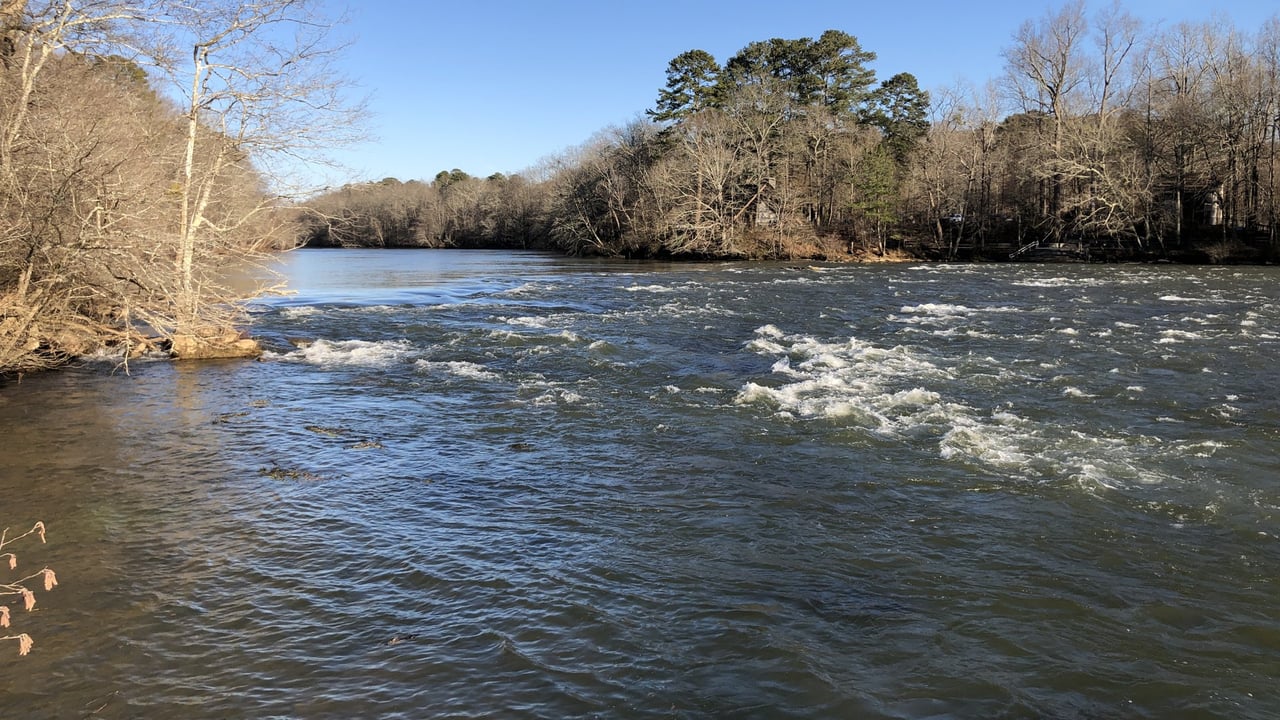
The closest big green space is the Chattahoochee River National Recreation Area, managed by the National Park Service. It covers 48 miles of the river and 15 land units through Atlanta's northern suburbs, with more than 60 miles of hiking trails.
Two units come up often in this part of Cobb. The Cochran Shoals unit has multi-use trails and a fitness loop that the park service recommends for cycling. The Palisades unit's Paces Mill entrance is on MARTA's Route 12, the same bus that reaches the Cumberland Transfer Center.
Check the National Park Service site for which units are closest to the address you are considering, and for current hours, fees and conditions. Cobb County also operates parks and trails across the county, and its parks department publishes facilities and programs online, which is the best way to see what is closest to a specific street.
Because the area is in unincorporated Cobb County, property taxes are set by Cobb County and the Cobb County School District. Homeowners should verify the millage rate that applies to a specific parcel with the Cobb County Tax Commissioner.
We deliberately do not quote a rate here, because rates change every year and vary by parcel. For how the levies stack up across the county line, see Cobb County vs. Fulton County property taxes.
The Cobb County School District is the second largest school system in Georgia and the 23rd largest in the country. It serves 105,738 students across 112 schools, including 66 elementary, 26 middle and 17 high schools, based on the Georgia Department of Education's October 2025 count.
The district publishes attendance zone maps, and it says plainly that they are for general information and that buyers should not make a home purchasing decision based solely on them. Which school serves a given address depends on the address and the current zone, so confirm with the district before you buy or lease.
Every upside here comes with a matching cost, and the right balance depends on your routine.
When quiet evenings, a yard, or a street that does not change on event nights matter most. A neighborhood a few miles away in Smyrna, Vinings or East Cobb still puts the ballpark, the restaurants and the highways within a short drive.
Those places simply move the volume knob. If walkability is the draw, our look at why Smyrna is one of metro Atlanta's most walkable suburbs is a good next read. Some people also find the best arrangement is to live elsewhere and treat The Battery as a place to visit, which is a perfectly good way to enjoy it.
And if your current home already gives you what you need, staying put is often the smartest decision. A new address near a stadium is an upgrade in some respects and a trade in others.
The best way to learn what living near Truist Park feels like is to spend a few days in it: a weeknight game, a quiet Sunday morning, and a Tuesday at 6 p.m.
The ballpark carries an Atlanta mailing address, but it sits in the Cumberland area of unincorporated Cobb County, outside every city limit.
No. Properties in unincorporated Cobb County are taxed by Cobb County and the Cobb County School District, not by the City of Atlanta. Verify the specific parcel with the Cobb County Tax Commissioner.
Major League Baseball teams play 81 regular-season home games, and the Braves' 2026 schedule follows that pattern. The exact dates are published each year on the Braves schedule page.
Partly. CobbLinc's fare-free Circulator Blue and Route 15 serve the ballpark, and MARTA's Route 12 bus connects at the Cumberland Transfer Center. Service and schedules change, so check current information.
The Battery district is designed for walking. Beyond it, most daily errands involve a car.
Yes, more than once. Go on a weeknight game, a weekend afternoon and a quiet weekday evening. Park where a resident or guest would park, walk to dinner, and listen at the hours you would be home.
The association or leasing office can provide the governing documents, fee schedule and quiet-hour rules. The Cobb County Community Development Agency can answer questions about zoning and permits for a specific address.
Checked October 26, 2026.
Questions? Call (470) 990-4414.
Start Your New Home Search Now!
Stay up to date on the latest real estate trends.
You’ve got questions, and we can’t wait to answer them.