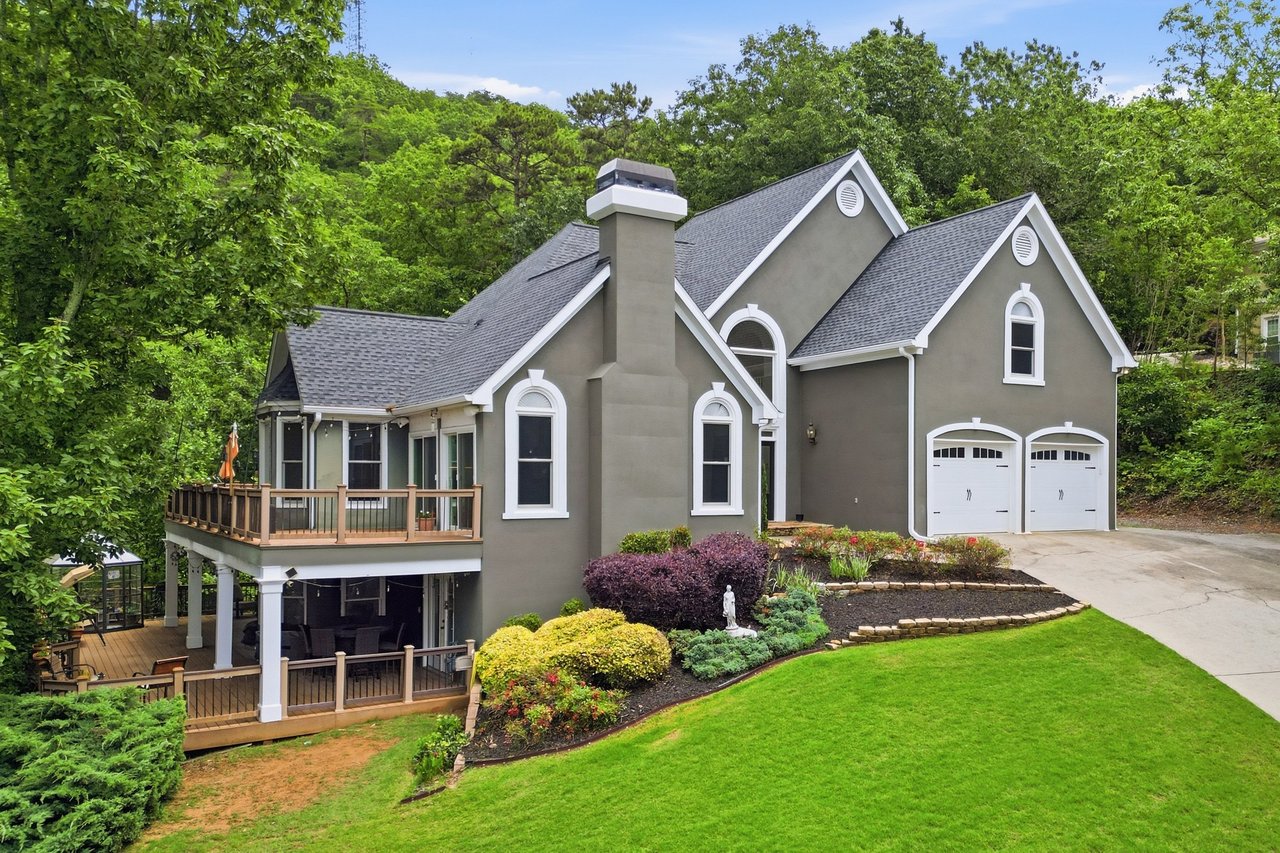
Renting vs. Buying in Atlanta 2026: When Does Homeownership Make Financial Sense?
First-Time Buyers

First-Time Buyers
One of the most important financial decisions facing Atlanta residents in 2026 is whether to continue renting or make the transition to homeownership. With rental prices in popular intown neighborhoods continuing to climb and mortgage rates stabilizing, the math behind this decision has shifted in favor of buying for many residents. However, the right answer depends on your individual financial situation, timeline, and lifestyle priorities.
This guide breaks down the real costs of renting versus buying in Atlanta's most popular neighborhoods, examines the financial factors that tip the scales in either direction, and helps you determine when homeownership makes sense for your situation.
Rental prices in Atlanta's most desirable intown neighborhoods have increased steadily over the past several years. In 2026, average monthly rents for a one-bedroom apartment in Midtown range from $1,600 to $2,200, while two-bedroom units typically rent for $2,200 to $3,200. In Old Fourth Ward and Inman Park, one-bedroom apartments average $1,500 to $2,000, with two-bedrooms ranging from $2,000 to $2,800. Virginia-Highland and Poncey-Highland rents fall in similar ranges, while Buckhead commands some of the highest rents in the city at $1,800 to $2,500 for one-bedrooms and $2,500 to $3,800 for two-bedrooms.
These rental costs represent money that builds no equity and provides no tax benefits. Over a five-year period, a renter paying $2,000 per month will spend $120,000 in rent with nothing to show for it in terms of asset accumulation.
To make a fair comparison, buyers need to calculate the total monthly cost of ownership, not just the mortgage payment. For a $350,000 condo in Midtown with a 10 percent down payment, the monthly costs in 2026 would typically include a mortgage payment of approximately $2,000 to $2,200 depending on the interest rate, property taxes of $250 to $350 per month, HOA fees of $300 to $500 per month, homeowner's insurance of $75 to $125 per month, and private mortgage insurance of $100 to $150 per month if putting less than 20 percent down. This totals roughly $2,725 to $3,325 per month.
At first glance, buying appears more expensive than renting. However, several factors change this calculation significantly. A portion of each mortgage payment goes toward principal, building equity in your home. Mortgage interest and property taxes may be tax-deductible. You are protected from rent increases for as long as you own. And your property may appreciate in value over time, creating additional wealth.
The break-even point is when the financial benefits of owning begin to outweigh the additional costs compared to renting. In Atlanta's current market, most buyers reach the break-even point within three to five years of purchase, depending on the specific property, neighborhood, and financing terms. Factors that shorten the break-even period include strong property appreciation, which many intown Atlanta neighborhoods have experienced, lower interest rates, and higher rental inflation rates in the same area.
If you plan to live in Atlanta for fewer than three years, renting typically makes more financial sense. If your timeline extends beyond five years, buying is almost always the better financial decision in the current Atlanta market.
Beyond the monthly cost comparison, homeownership in Atlanta offers significant wealth-building potential. Atlanta's intown neighborhoods have experienced average annual appreciation of 4 to 7 percent over the past decade. On a $350,000 property, even conservative 3 percent annual appreciation adds $10,500 in value per year. Combined with mortgage principal reduction of approximately $5,000 to $7,000 in the first year, a homeowner can build $15,000 to $17,000 in equity annually while their renter counterpart builds none.
Over a 10-year period, the difference in net worth between a homeowner and a renter in the same Atlanta neighborhood can exceed $200,000 when accounting for equity buildup, appreciation, and the renter's ongoing exposure to rent increases.
Despite the financial advantages of buying, renting remains the better choice in several situations. If you are new to Atlanta and still exploring neighborhoods, renting gives you flexibility to discover where you want to live long-term. If your employment situation is uncertain or you may need to relocate within two to three years, the transaction costs of buying and selling may outweigh the equity benefits. If you have significant debt, a low credit score, or insufficient savings for a down payment and closing costs, taking time to improve your financial position before buying is prudent.
If the numbers make sense for your situation, the path from renting to buying in Atlanta involves several key steps. Start by getting pre-approved for a mortgage to understand your purchasing power. Review your budget to account for the full cost of homeownership including maintenance and repairs. Research neighborhoods that align with your lifestyle and budget. And work with an experienced real estate agent who understands both the local market and the financial considerations specific to first-time buyers.
The Agency Atlanta helps renters make the transition to homeownership every day. Our team can walk you through the financial comparison for specific properties and neighborhoods, connect you with trusted lenders, and guide you through the buying process from pre-approval to closing. Contact us to schedule a consultation and start evaluating whether 2026 is the right time for you to buy in Atlanta.
Start Your New Home Search Now!
Stay up to date on the latest real estate trends.
You’ve got questions, and we can’t wait to answer them.